
Industrial
Rubber Hose
Complete guide to structure, materials, types, and selection — from a manufacturer with 20+ years of OEM experience.
What Is a Rubber Hose?
A rubber hose is a flexible industrial pipeline designed to transfer liquids, gases, and abrasive materials under pressure. Built from vulcanized rubber compounds and reinforced with textile or steel wire layers, rubber hoses deliver the flexibility and durability required by demanding industrial environments.
Rubber hoses are used across manufacturing, agriculture, construction, oil & gas, and automotive sectors worldwide. Unlike rigid pipes, their flexibility allows routing around machinery, absorbing vibration, and connecting moving parts — without compromising pressure performance.
Rubber Hose Structure
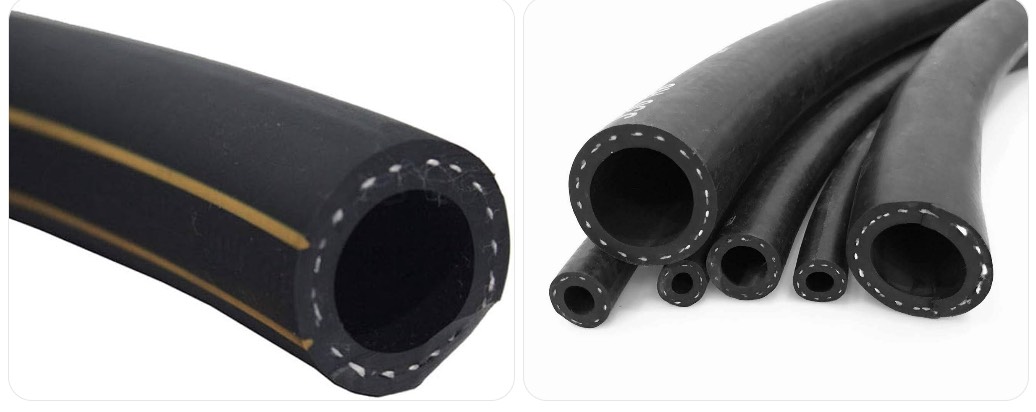
All industrial rubber hoses share a three-layer construction. Each layer serves a specific engineering function:
| Layer | Common Material | Engineering Function |
|---|---|---|
| Inner Tube | NBR / EPDM / NR | Direct contact with media — must be chemically compatible |
| Reinforcement | Polyester textile / Steel wire braid / Steel spiral | Determines working pressure and burst resistance |
| Outer Cover | SBR / CR / EPDM compound | Protects against abrasion, UV, ozone, and weather |
Rubber Compound Selection
The rubber compound used for the inner tube is the most critical material decision. It must be chemically compatible with the fluid being transferred. The four most common compounds in industrial rubber hose manufacturing:
| Compound | Key Property | Best For | Avoid With |
|---|---|---|---|
| NBR (Nitrile) | Oil & fuel resistant | Hydraulic oil, diesel, fuel lines | Ozone, strong acids |
| EPDM | Heat & ozone resistant | Water, steam, brake fluid | Petroleum-based fluids |
| SBR | Cost-effective, flexible | Air, water, general industrial | Oils, fuels, solvents |
| Neoprene (CR) | Chemical & flame resistant | Refrigerants, mild chemicals | Strong oxidizing agents |
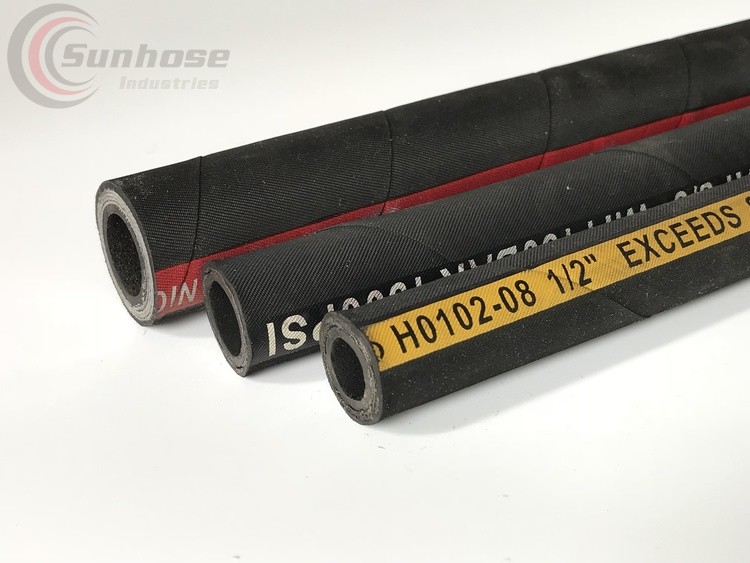
Types of Industrial Rubber Hose
Technical Parameters
Standard performance ranges for CNFLEX industrial rubber hose products. Custom specifications are available on request for OEM applications.
| Parameter | Standard Range | Notes |
|---|---|---|
| Working Pressure | 10 – 600 bar | Depends on reinforcement type and diameter |
| Temperature Range | -40°C to +120°C | EPDM steam hose up to +180°C |
| Inner Diameter | 6mm – 300mm | OEM sizes available |
| Safety Factor | ≥ 3:1 (burst/working) | Per ISO / SAE standards |
| Standards | SAE J517 / ISO 18752 / EN 853 | CE / RoHS available |
Industry Applications
| Industry | Typical Use | Recommended Type |
|---|---|---|
| Agriculture | Irrigation, sprayer systems | EPDM water hose, layflat hose |
| Construction | Hydraulic excavators, concrete pumping | High-pressure hydraulic hose |
| Manufacturing | Air tools, coolant systems | Air hose, water hose |
| Oil & Gas | Fuel transfer, suction & discharge | NBR oil hose, composite hose |
| Automotive | Turbo, radiator, brake systems | EPDM / silicone hose |
| Mining | Slurry, compressed air | Heavy-duty abrasion-resistant |
Rubber Hose vs PVC Hose
Understanding when to choose rubber over PVC is one of the most common buyer questions. The decision comes down to pressure requirements, temperature range, and service life expectations:
| Factor | Rubber Hose | PVC Hose |
|---|---|---|
| Working Pressure | High (up to 600 bar) | Low–Medium (up to 20 bar) |
| Temperature Range | Wide: -40°C to +120°C | Limited: 0°C to +60°C |
| Durability | High — excellent fatigue resistance | Medium — becomes brittle over time |
| Flexibility (cold) | Remains flexible at -40°C | Stiffens below 5°C |
| Chemical Resistance | Compound-dependent, broad range | Good for mild chemicals |
| Unit Cost | Higher initial cost | Lower initial cost |
| Long-term Value | Better — longer service life | Moderate — more frequent replacement |
Rule of thumb: Choose rubber when pressure exceeds 20 bar, operating temperature is below 5°C or above 60°C, or when continuous flexing is required. PVC is suitable for light-duty, cost-sensitive applications in mild environments.
How to Choose the Right Rubber Hose
Use the STAMPED method — the industry-standard framework for hose selection. Each letter represents a critical parameter that must be confirmed before ordering:
STAMPED Selection Framework
When in doubt, contact our technical team with your fluid type, working pressure, and temperature range — we will recommend the correct specification.
Common Selection Mistakes
⚠ Avoid These Errors
- Wrong rubber compound — Incompatible fluid causes inner tube swelling, softening, or delamination. Always confirm chemical compatibility before ordering.
- Underrated working pressure — Using a hose rated below system pressure leads to premature failure or burst. Include a minimum 3:1 safety factor.
- Ignoring temperature limits — Exceeding maximum temperature causes rapid compound degradation and cracking. Steam hoses require a different specification from standard water hoses.
- Incorrect bend radius — Bending tighter than the minimum bend radius kinks the reinforcement and reduces service life significantly.
- Mismatched fittings — Using non-crimped or wrong-size fittings is the most common cause of hose assembly failure in the field.
Industrial Rubber Hose
OEM Supplier
Custom sizes · OEM manufacturing · Global delivery
Minimum order: 1,000 meters · Samples available